

10
Jun
Multiple factors affect current-carrying capacity of ACAR aluminum alloy core aluminum stranded wires
Share:
In recent years, ACAR (Aluminum Conductor Aluminum Alloy Reinforced) aluminum alloy core aluminum stranded wires have gradually replaced traditional aluminum conductor steel reinforced wires in urban and rural distribution network upgrading, new energy power transmission and high-voltage overhead transmission projects. Thanks to their high strength, light weight, excellent corrosion resistance and good electrical conductivity, they have become key materials for overhead transmission lines.
In practical engineering applications, the safe current-carrying capacity of ACAR conductors is not a fixed value. It is restricted by multiple factors including unique composite structure, material composition, operating environment, installation method and operating conditions. Industry experts point out that clarifying relevant influencing factors and accurately adjusting current-carrying parameters are essential to avoid line overheating, overload and aging faults, and ensure the long-term safe and efficient operation of overhead transmission lines.
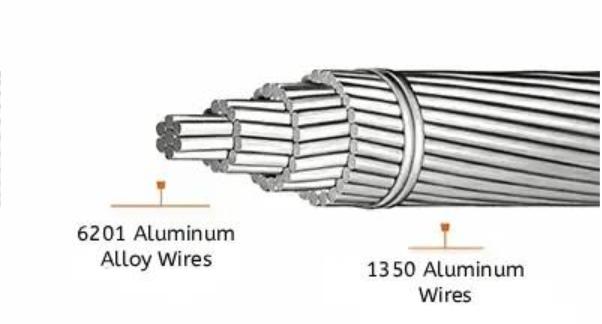
Different from conventional conductors, the internal structure and material ratio are the fundamental factors determining the rated current-carrying capacity of ACAR wires. Featuring a composite structure with an inner aluminum alloy core and outer pure aluminum strands, the inner core mainly bears mechanical tension while the outer aluminum layer undertakes electric conduction.
The effective cross-sectional area of the outer conductive aluminum strands directly affects conductor resistance: a larger cross-section means lower resistance and higher rated current-carrying capacity. Uneven wire diameter or loose stranding will increase power loss and reduce current-carrying performance. Besides, the formula of the inner aluminum alloy core plays a vital role. High-quality heat-resistant aluminum alloy keeps low resistance even at high temperatures and maintains stable current transmission. Inferior alloy materials tend to have sharply increased resistance and severe heat generation under high temperature, which greatly limits the current-carrying capacity. Stranding layers and lay length also affect heat dissipation and conductive uniformity. Products with sophisticated manufacturing techniques deliver more stable performance.
Ambient temperature, meteorological conditions and application scenarios are major external factors impacting the actual current-carrying capacity. ACAR conductors are mostly used in open-air overhead layouts, whose heat dissipation is highly dependent on natural conditions. The standard current-carrying capacity is calculated at an ambient temperature of 25℃. When the temperature rises to 35℃ to 40℃ in hot summer, desert areas or humid southern regions, convection heat dissipation deteriorates obviously. The accumulated heat cannot be dissipated in a timely manner, resulting in a 12% to 18% drop in safe current-carrying capacity.
Wind speed and solar radiation also exert great influence. Under windless and strong sunlight conditions, the surface temperature of conductors rises rapidly, requiring a notable derating of current load. By contrast, good ventilation helps heat dissipation and enables conductors to operate close to their rated capacity. In addition, low air pressure at high altitudes, rain, snow, salt fog and pollution will cause surface oxidation and dirt accumulation, increase surface resistance and heat generation, and lead to a gradual decline of long-term operating current-carrying capacity.
Overhead installation mode, conductor spacing and circuit arrangement are key variables in power grid design that are often overlooked. For multi-circuit lines erected on the same tower, adjacent ACAR conductors will generate superimposed thermal fields, which worsen heat dissipation and necessitate current derating.
Field test data shows that the correction factor is about 0.88 for double-circuit lines on one tower, and drops to around 0.75 for four or more closely arranged circuits, which means the actual available current-carrying capacity is greatly reduced. Furthermore, insufficient line spacing and low erection height hinder air circulation and heat dissipation, causing further attenuation of current-carrying capacity. Single independent overhead lines with unobstructed surroundings enjoy the best heat dissipation and can give full play to the advantages of ACAR conductors.
Long-term operating conditions and conductor status determine the stability of current-carrying performance throughout the service life. Brand-new qualified ACAR wires maintain stable electrical parameters. However, long-term full-load or overload operation will cause repeated overheating, material fatigue of both aluminum alloy core and outer aluminum strands, as well as continuous increase of conductor resistance, thus degrading current-carrying performance.
Non-standard crimping or loose and oxidized line joints will bring excessive contact resistance and form hot spots, which cap the overall current load of the line. Moreover, long-term outdoor operation may lead to oxidation, dust deposition, corrosion and even strand breakage. These problems reduce conductivity, aggravate heat loss and narrow the safe operating current range.
Relevant person in charge of the industry stated that the rated value cannot be directly adopted when calculating the current-carrying capacity of ACAR conductors. Comprehensive correction shall be carried out according to conductor specifications, local meteorological conditions, layout schemes and actual load demands.
In key projects such as new energy grid connection, intercity power transmission and rural power network renovation, fully analyzing influencing factors, optimizing erection schemes and selecting proper conductor models can not only maximize the strengths of ACAR wires including high strength, good conductivity and corrosion resistance to improve power transmission capacity, but also effectively prevent potential risks such as thermal overload and line failures. It lays a solid foundation for the safe, stable and economical operation of smart power grids. In the future, refined calculation of ACAR current-carrying capacity considering multiple coupled factors will become an important direction to improve the quality and efficiency of power grid engineering.
In practical engineering applications, the safe current-carrying capacity of ACAR conductors is not a fixed value. It is restricted by multiple factors including unique composite structure, material composition, operating environment, installation method and operating conditions. Industry experts point out that clarifying relevant influencing factors and accurately adjusting current-carrying parameters are essential to avoid line overheating, overload and aging faults, and ensure the long-term safe and efficient operation of overhead transmission lines.
Different from conventional conductors, the internal structure and material ratio are the fundamental factors determining the rated current-carrying capacity of ACAR wires. Featuring a composite structure with an inner aluminum alloy core and outer pure aluminum strands, the inner core mainly bears mechanical tension while the outer aluminum layer undertakes electric conduction.
The effective cross-sectional area of the outer conductive aluminum strands directly affects conductor resistance: a larger cross-section means lower resistance and higher rated current-carrying capacity. Uneven wire diameter or loose stranding will increase power loss and reduce current-carrying performance. Besides, the formula of the inner aluminum alloy core plays a vital role. High-quality heat-resistant aluminum alloy keeps low resistance even at high temperatures and maintains stable current transmission. Inferior alloy materials tend to have sharply increased resistance and severe heat generation under high temperature, which greatly limits the current-carrying capacity. Stranding layers and lay length also affect heat dissipation and conductive uniformity. Products with sophisticated manufacturing techniques deliver more stable performance.
Ambient temperature, meteorological conditions and application scenarios are major external factors impacting the actual current-carrying capacity. ACAR conductors are mostly used in open-air overhead layouts, whose heat dissipation is highly dependent on natural conditions. The standard current-carrying capacity is calculated at an ambient temperature of 25℃. When the temperature rises to 35℃ to 40℃ in hot summer, desert areas or humid southern regions, convection heat dissipation deteriorates obviously. The accumulated heat cannot be dissipated in a timely manner, resulting in a 12% to 18% drop in safe current-carrying capacity.
Wind speed and solar radiation also exert great influence. Under windless and strong sunlight conditions, the surface temperature of conductors rises rapidly, requiring a notable derating of current load. By contrast, good ventilation helps heat dissipation and enables conductors to operate close to their rated capacity. In addition, low air pressure at high altitudes, rain, snow, salt fog and pollution will cause surface oxidation and dirt accumulation, increase surface resistance and heat generation, and lead to a gradual decline of long-term operating current-carrying capacity.
Overhead installation mode, conductor spacing and circuit arrangement are key variables in power grid design that are often overlooked. For multi-circuit lines erected on the same tower, adjacent ACAR conductors will generate superimposed thermal fields, which worsen heat dissipation and necessitate current derating.
Field test data shows that the correction factor is about 0.88 for double-circuit lines on one tower, and drops to around 0.75 for four or more closely arranged circuits, which means the actual available current-carrying capacity is greatly reduced. Furthermore, insufficient line spacing and low erection height hinder air circulation and heat dissipation, causing further attenuation of current-carrying capacity. Single independent overhead lines with unobstructed surroundings enjoy the best heat dissipation and can give full play to the advantages of ACAR conductors.
Long-term operating conditions and conductor status determine the stability of current-carrying performance throughout the service life. Brand-new qualified ACAR wires maintain stable electrical parameters. However, long-term full-load or overload operation will cause repeated overheating, material fatigue of both aluminum alloy core and outer aluminum strands, as well as continuous increase of conductor resistance, thus degrading current-carrying performance.
Non-standard crimping or loose and oxidized line joints will bring excessive contact resistance and form hot spots, which cap the overall current load of the line. Moreover, long-term outdoor operation may lead to oxidation, dust deposition, corrosion and even strand breakage. These problems reduce conductivity, aggravate heat loss and narrow the safe operating current range.
Relevant person in charge of the industry stated that the rated value cannot be directly adopted when calculating the current-carrying capacity of ACAR conductors. Comprehensive correction shall be carried out according to conductor specifications, local meteorological conditions, layout schemes and actual load demands.
In key projects such as new energy grid connection, intercity power transmission and rural power network renovation, fully analyzing influencing factors, optimizing erection schemes and selecting proper conductor models can not only maximize the strengths of ACAR wires including high strength, good conductivity and corrosion resistance to improve power transmission capacity, but also effectively prevent potential risks such as thermal overload and line failures. It lays a solid foundation for the safe, stable and economical operation of smart power grids. In the future, refined calculation of ACAR current-carrying capacity considering multiple coupled factors will become an important direction to improve the quality and efficiency of power grid engineering.
Previous article:
Next article:


